Neighbourhood profile · Albert-Eden local board
Maintaining a house on the lava fields of Mt Eden and Epsom
Mt Eden, Epsom, Balmoral and Sandringham are built on lava flows from Maungawhau and neighbouring cones, so the ground under many houses is fractured basalt rather than clay. That shapes everything from drainage to digging. Above ground the stock is largely timber villas and interwar bungalows, with larger early houses on Epsom's slopes and newer infill throughout. Character overlays, volcanic viewshafts and private stormwater soakage are the local rules and systems a homeowner is most likely to meet.
Profile checked · covers Mt Eden, Epsom, Balmoral, Sandringham · Sources · Report an error

Mt Eden and Epsom at a glance
- Ground
- Basalt lava flows and scoria around Maungawhau / Mount Eden; loose rock walls still mark some boundaries
- Drainage
- Many properties shed stormwater into private soakage holes drilled into the basalt rather than a public pipe
- Housing
- Villas and bungalows from the early 20th century, larger period homes in Epsom, plus later flats and infill
- Planning overlays
- Special Character Areas Overlay over much of the isthmus streets; Volcanic Viewshafts and Height Sensitive Areas Overlay around the maunga
- Maunga
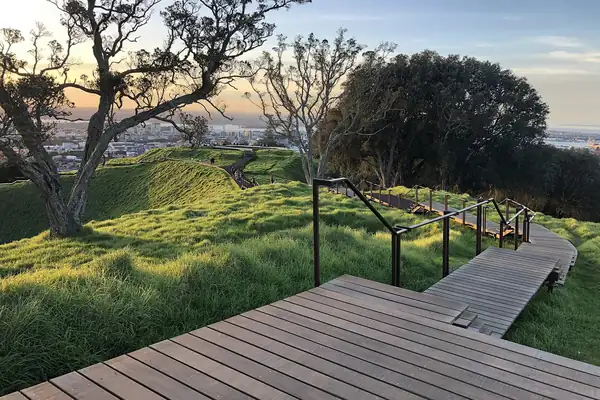
- Maungawhau is administered by the Tūpuna Maunga o Tāmaki Makaurau Authority
How does basalt under the section change repairs?
It makes digging slow and drainage unusual. Lava from the cones cooled into hard, fractured basalt, often close to the surface, so trenches for drains, fence posts, piles or retaining walls can hit rock within a short depth. Any quote involving excavation should say how rock will be handled, because breaking it out takes different equipment and time than digging soil.
The upside is free-draining ground in many streets. Water that would pond on clay elsewhere in Auckland often disappears quickly into the fractured rock.
Old drystone walls built from field basalt survive as boundaries in parts of Mt Eden and Epsom. They are worth keeping stable rather than rebuilding, and a loose wall is a job for someone used to stonework.
What is a soakage hole and who looks after it?
A soakage hole is a bore or gravel-filled pit that lets roof and paved-area water drain straight into the basalt aquifer. Stormwater in the Mt Eden and Mt Albert basalt has been disposed of this way for many decades, and many properties have no public stormwater connection. Under the council's Stormwater Bylaw, a private soakage device is the owner's responsibility to maintain.
Soakage holes clog with leaves, silt and roof grit over time. A silt trap upstream and regular gutter cleaning keep debris out and help the hole keep its capacity.
Council data reported in 2023 identified hundreds of Mt Eden and Epsom sites that cannot connect to the public network and have limited soakage capacity. Buyers should ask how a property's stormwater is disposed of before purchase.
- Locate the soakage hole and silt trap on the property file
- Keep gutters and downpipe leaf guards clear
- Have a drainlayer test a slow hole before adding paving or extensions
Why can groundwater rise under Balmoral and Mt Eden?
Because the same basalt that absorbs stormwater stores it. After very wet periods the Mt Eden aquifer can fill to ground level, and in early 2022 Watercare and the council's Healthy Waters warned that record-high groundwater had raised the risk of wastewater overflows around Balmoral, Kingsland and Mt Eden. Low points and basements are where owners notice it first.
For homeowners, the practical steps are making sure gully traps sit above ground level, that cracked or root-damaged sewer laterals are repaired, and that basements have a working sump.
Damp under floors after a long wet season is also a cue to check ventilation and add a ground moisture barrier.
Which older-house problems show up most in Epsom and Sandringham?
Borer, tired roofs and failing joinery. Villas and bungalows from the early 20th century were built from native and exotic timber with plenty of untreated sapwood, which the common house borer favours. Original corrugated iron roofs, box gutters on bay villas and leadlight or sash windows on bungalows are the parts that most often need specialist repair rather than replacement.
Bungalow roofs with wide eaves and low pitches hold leaf litter, and the internal box gutters on some villas overflow into ceilings when blocked.
Repainting is the main defence for old weatherboards. Older layers may contain lead, so preparation should be contained and cleaned up properly.
Do viewshaft and character rules apply to maintenance?
Not to ordinary upkeep, but they matter for anything that changes height or appearance. The Volcanic Viewshafts and Height Sensitive Areas Overlay limits building heights to protect views of the maunga, including Maungawhau, and the Special Character Areas Overlay covers many streets. Repainting and like-for-like repairs are usually fine; additions, demolition and front-facing changes need checking.
A second storey, a large dormer or a new garage at the front is where these overlays most often bite. The council's planning maps show which apply to a given address.
Work on the maunga itself, including tree work along its boundary, falls under the Tūpuna Maunga Authority, which co-governs the cones with Auckland Council.
Are pests different near the maunga?
The pest mix is typical of mature inner suburbs, with a few local twists. Large old gardens, rock walls and the vegetation on the cones give rats shelter, wasps nest in banks and wall gaps in late summer, and borer is common in old timber. Ants are a frequent warm-season complaint in kitchens across the flat streets of Balmoral and Sandringham.
Gaps in basalt walls and loose scoria make good rat harbourage, so bait stations along walls work better than inside the house alone.
Paper wasp and German wasp nests under eaves are worth removing early in the season before they grow.
Ranked businesses that reach Mt Eden and Epsom
Mt Eden and Epsom sits inside the guide's Central Auckland area, which has its own ranked lists for pest control, borer treatment, wasp nest removal, house washing, gutter cleaning and roof painting. The table counts, for every trade, the eligible businesses whose Google listing is in one of the localities above or whose own website names one of them.
| Trade | Listing here | Website names it | Eligible Auckland-wide |
|---|---|---|---|
| Pest control | 0 | 10 | 41 |
| Borer treatment | 0 | 5 | 19 |
| Wasp nest removal | 0 | 6 | 35 |
| Commercial pest control | 0 | 6 | 32 |
| House washing | 1 | 5 | 46 |
| Gutter cleaning | 0 | 4 | 43 |
| Roof painting | 0 | 10 | 40 |
| Handyman services | 1 | 1 | 18 |
| Healthy homes assessments | 0 | 1 | 10 |
| Garage door repair | 0 | 5 | 29 |
Counts come from the guide's Google Maps and website data (read 6 October 2026; garage doors 10 October 2026). A business that serves all of Auckland without naming suburbs is not counted here, so a low number does not mean nobody comes.
Prices, from businesses' own published lists: pest control · borer treatment · wasp nest removal · house washing · gutter cleaning · roof painting · handyman services · healthy homes assessment · garage door repair.
Questions owners ask about Mt Eden and Epsom
How do I know if my Mt Eden house uses a soakage hole?
Check the property file from Auckland Council, which usually shows the stormwater system. On site, look for a manhole or grated cover in the garden with downpipes leading to it rather than to the street. A drainlayer can trace the lines and test capacity. If water overflows from the hole in heavy rain, it is likely silted and needs clearing.
Can I build up in Epsom without checking viewshafts?
No. The Volcanic Viewshafts and Height Sensitive Areas Overlay sets height limits along protected views of the maunga, and some Epsom and Mt Eden properties sit under them. The limits are fixed by survey coordinates, so even a modest second storey can be affected. Check the planning maps and get advice before design work starts.
Why is excavation more expensive on the isthmus?
Many sections sit on hard basalt close to the surface. Breaking rock for drains, foundations or retaining walls needs heavier equipment and takes longer than digging clay. Getting a geotechnical opinion or test holes before pricing larger jobs avoids surprises.
Sources
- Auckland Council: Stormwater disposal via soakage in the Auckland region (TR2013/040)
- Auckland Council: Overland flow paths and soakage guidance
- Watercare: Ground saturation elevates risk of wastewater overflows in parts of central Auckland
- Auckland Unitary Plan: J 6.3 Volcanic viewshafts and height sensitive areas
- Auckland Unitary Plan: D18 Special Character Areas Overlay
- Office of the Auditor-General: About the Tūpuna Maunga o Tāmaki Makaurau Authority
- Science Learning Hub: Ngā maunga o Tāmaki Makaurau, Auckland's volcanic field
Nearby profiles: Ponsonby and the inner west · Howick and East Auckland · all neighbourhoods.