Neighbourhood profile · Waitākere Ranges local board
Maintaining a bush home in Titirangi and Laingholm
Titirangi and its neighbours sit in the foothills of the Waitākere Ranges, where houses are tucked into steep, bush-covered sections on winding roads. That setting drives almost every maintenance job: shade and damp feed moss and mould, leaf fall clogs gutters, bush brings rats and possums to the door, and kauri dieback rules shape any digging. Much of the area falls within the Waitākere Ranges Heritage Area, and some homes rely on onsite wastewater rather than the public sewer.
Profile checked · covers Titirangi, Laingholm, Woodlands Park, Waima, Konini · Sources · Report an error
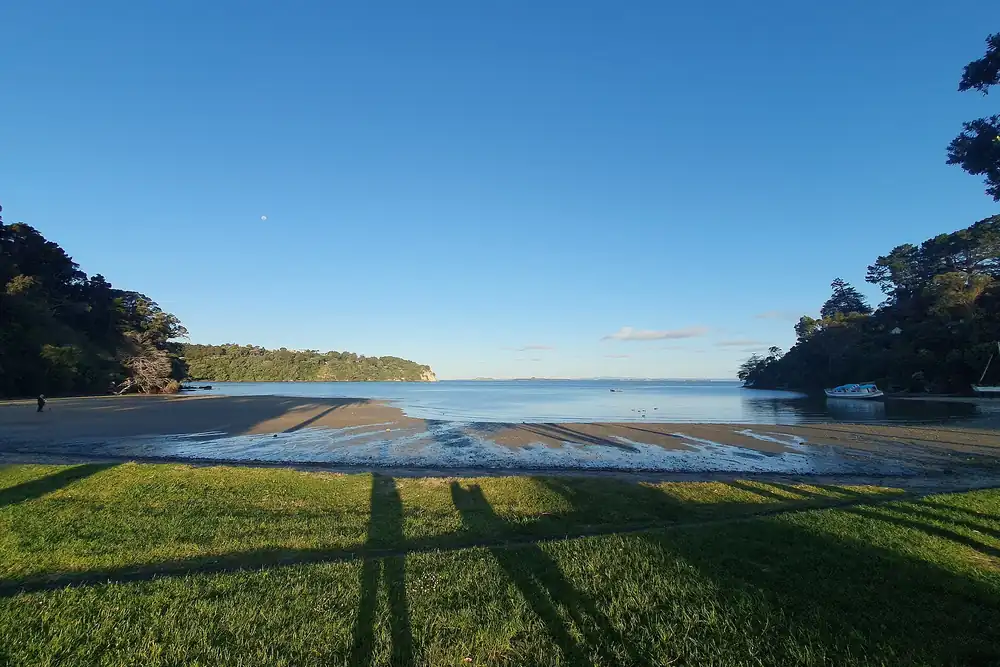
Titirangi at a glance
- Setting
- Waitākere Ranges foothills facing the Manukau Harbour; dense native bush
- Housing
- Timber homes on steep sections, many on piles or poles with large decks
- Climate exposure
- Shade, high rainfall and damp; heavy leaf fall
- Rules
- Waitākere Ranges Heritage Area Act 2008; kauri dieback National Pest Management Plan; ecological overlays on bush
- Access
- Narrow winding roads, steep and shared driveways, limited parking
Why bush sections need more gutter and roof work
Under a canopy of native trees, Titirangi roofs collect leaves, twigs and seed pods all year, and the shade keeps them damp. Gutters block faster here than almost anywhere in urban Auckland, and blocked gutters overflow into walls, decks and subfloors. Clearing gutters at least twice a year, fitting guards where practical and treating roof moss and lichen are core jobs for a bush home.
Overhanging branches also scrape roofing and give rats and possums a bridge to the roof. Trimming them back is worth doing, but tree work in this area should be checked against council rules first, as much of the bush is protected.
- Gutters and downpipes: clear in late autumn and late spring
- Roof: moss and lichen treatment before any repaint
- Branches: keep clear of the roofline, subject to tree rules
Damp, decks and timber on steep ground
Many Titirangi homes are timber, perched on piles or poles over steep slopes, with large decks to catch the light. Those decks, stairs and the framing beneath them stay damp in the shade and are prone to rot, slippery surfaces and corroding fixings. A yearly check underneath, where the posts, joists and bearers meet, catches decay before it becomes a safety problem.
Inside, the same damp shows up as mould on south-facing walls and in wardrobes. Good ventilation, extraction and heating make a large difference, and for landlords the healthy homes standards set minimums for each.
Older native timbers in these homes can carry borer, so the subfloor and roof space are worth inspecting at the same time as the deck.
Kauri dieback rules and digging near trees
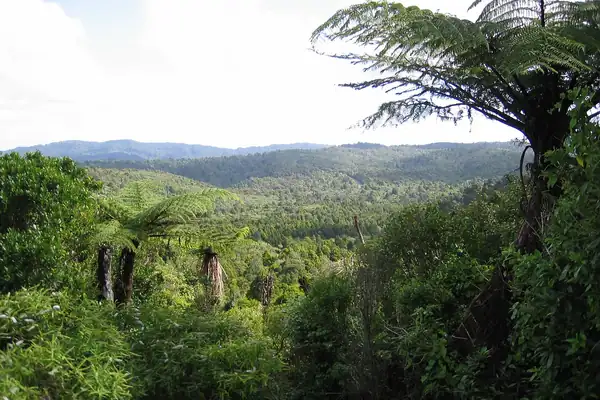
Kauri dieback is a major threat to the Waitākere Ranges forest, and since 2 August 2022 a National Pest Management Plan has set rules for people living and working around kauri. The disease spreads in soil, so earthworks, drainage, retaining and driveway work near kauri need care with hygiene and may require an approved risk management plan. Owners should check before any digging.
Practical steps include cleaning footwear and tools, keeping vehicles off kauri root zones and disposing of soil properly. Contractors who work in the area regularly should be familiar with these hygiene expectations.
Te Kawerau ā Maki placed a rāhui over the ranges in 2017, and the council later closed tracks in high-risk areas, so the community is used to treating kauri protection seriously.
The heritage area and what it protects
The Waitākere Ranges Heritage Area Act 2008 covers about 27,700 hectares of public and private land, including much of the Titirangi and Laingholm foothills. Its purpose is to protect the area's natural character and cultural heritage. In practice, owners face tighter controls on subdivision, vegetation clearance and some building work than in most suburbs, so check consent requirements before starting a project.
Bush on private land can be covered by ecological overlays in the Unitary Plan, which can restrict removing or pruning native trees.
Septic tanks and stormwater on hillside sections
Some properties in the area are not connected to the public sewer and use onsite wastewater systems. Under the Auckland Unitary Plan these need inspection at least every three years, and Auckland Council's Safe Septic programme follows up on maintenance records. Steep sites also make stormwater management critical: uncontrolled runoff can cause slips, erode banks and overload disposal fields.
Buyers should ask whether a property is on mains or onsite wastewater, and request service records. A failing system on a slope is costly and can pollute streams running down to the Manukau.
Possums, rats and wasps from the bush edge
Because homes sit directly in or beside native bush, pest pressure is constant. Rats and possums move between the canopy and roof spaces, especially in cooler months, and wasps nest in banks, walls and hollow trees in late summer. Sealing roof and wall gaps, keeping branches back and careful baiting or trapping protect both the house and the surrounding birdlife.
Community pest-free groups work across the Waitākere Ranges, and residents can link their own trapping on a section into those wider efforts.
Getting a tradesperson up the driveway
Access is often the hardest part of a Titirangi job. Narrow, winding roads, steep or shared driveways and limited turning space can rule out large vehicles, skip bins or scaffolding trucks. Some sites need materials carried by hand. Describing the driveway, parking and any steps when booking helps contractors plan the right vehicle and crew size, and reduces the chance of a wasted trip.
Trades who regularly work in the foothills know which roads and turning bays to use, which can make scheduling smoother.
Ranked businesses that reach Titirangi
Titirangi sits inside the guide's West Auckland area, which has its own ranked lists for pest control, house washing and gutter cleaning. The table counts, for every trade, the eligible businesses whose Google listing is in one of the localities above or whose own website names one of them.
| Trade | Listing here | Website names it | Eligible Auckland-wide |
|---|---|---|---|
| Pest control | 0 | 4 | 41 |
| Borer treatment | 0 | 1 | 19 |
| Wasp nest removal | 0 | 2 | 35 |
| Commercial pest control | 0 | 3 | 32 |
| House washing | 0 | 4 | 46 |
| Gutter cleaning | 0 | 3 | 43 |
| Roof painting | 1 | 3 | 40 |
| Handyman services | 0 | 3 | 18 |
| Healthy homes assessments | 0 | 0 | 10 |
| Garage door repair | 0 | 2 | 29 |
Counts come from the guide's Google Maps and website data (read 6 October 2026; garage doors 10 October 2026). A business that serves all of Auckland without naming suburbs is not counted here, so a low number does not mean nobody comes.
Prices, from businesses' own published lists: pest control · borer treatment · wasp nest removal · house washing · gutter cleaning · roof painting · handyman services · healthy homes assessment · garage door repair.
Questions owners ask about Titirangi
Can I cut down a tree on my Titirangi property?
Possibly not without consent. Much of the bush in Titirangi and Laingholm is protected by the Waitākere Ranges Heritage Area framework and ecological overlays in the Auckland Unitary Plan. Kauri carry extra hygiene rules around their roots. Check with Auckland Council before removing or heavily pruning any native tree.
How often should gutters be cleaned under bush?
At least twice a year, and more often under heavy canopy or after storms. Leaf litter, twigs and seed pods build up quickly, and shade keeps them wet, which encourages rust and overflow. Gutter guards can help, but they still need occasional clearing.
Do Titirangi homes need special pest control?
They need more frequent pest control than most suburbs because bush runs right up to the walls. Rats, possums and wasps are the common problems. Methods should take account of nearby native wildlife, and kauri hygiene matters if work involves disturbing soil near trees.
Sources
- Waitākere Ranges Heritage Area Act 2008 (legislation.govt.nz)
- Auckland Council: Waitākere Ranges Heritage Area
- Tiakina Kauri: National Plan rules summary
- MPI: Kauri dieback controlled areas in Auckland region
- Auckland Unitary Plan: E5 On-site and small scale wastewater treatment and disposal
- Auckland Council: Onsite wastewater system compliance (Safe Septic)
- Auckland Council: State of the Waitākere Ranges Heritage Area 2018 report
Nearby profiles: Henderson and Te Atatū · Ponsonby and the inner west · all neighbourhoods.