Neighbourhood profile · Waiheke local board
Running a home on Waiheke Island
Waiheke homes look after their own water. There is no reticulated water supply on the island, so households rely on roof-fed rainwater tanks or water bought from carriers, and most properties treat wastewater onsite. That turns the roof, gutters, tanks and septic system into essential services rather than background maintenance. Add salt air, steep coastal sections, a separate district plan and the fact that every trade arrives by ferry, and island upkeep needs more planning than a mainland suburb.
Profile checked · covers Oneroa, Ostend, Onetangi, Surfdale, Palm Beach, Blackpool, Little Oneroa · Sources · Report an error
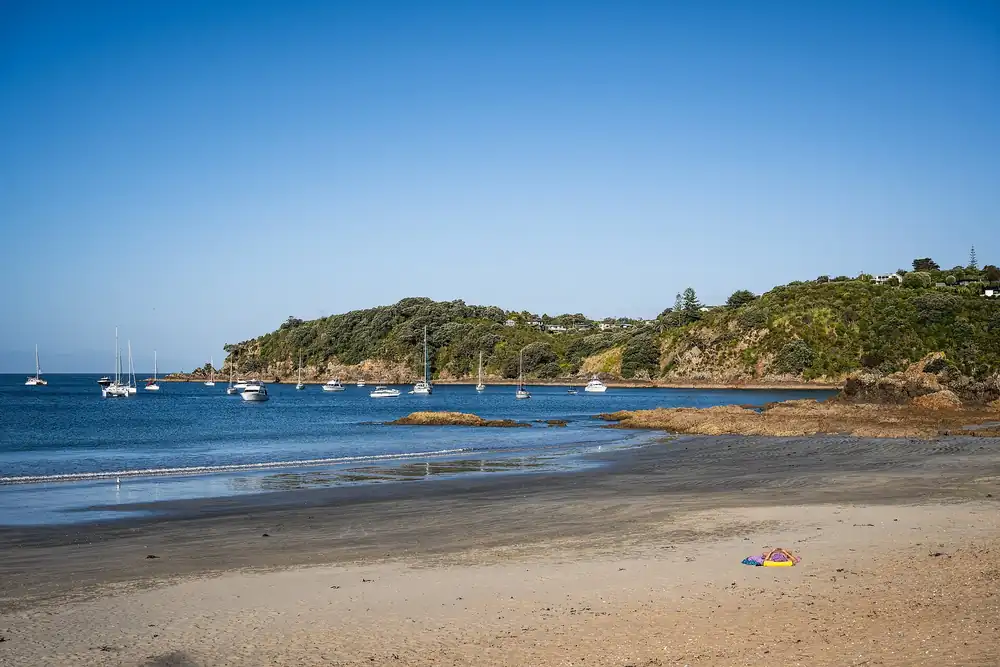
Waiheke Island at a glance
- Water
- No reticulated supply; rainwater tanks or carted water from carriers
- Wastewater
- Mostly onsite systems; Watercare's Owhanake plant serves part of Oneroa
- Planning
- District rules come from the Hauraki Gulf Islands Section of the Auckland Council District Plan, not the Unitary Plan
- Access
- Passenger ferries from downtown to Matiatia; vehicle ferry from Half Moon Bay to Kennedy Point, bookings required for vehicles
- Conservation
- Te Korowai o Waiheke has run island-wide stoat eradication since 2020, with rats as the next target
How should a roof be maintained when it collects drinking water?
As part of the water supply. On Waiheke the roof and gutters are the catchment for the household's drinking water, so anything on them ends up in the tank. Keep gutters clear of leaves, fit leaf guards and a first-flush diverter, and make sure any roof paint, sealant or moss treatment is suitable for potable water collection.
Auckland Council's rainwater guidance recommends regular checks of gutters, screens and tanks, and cleaning out tank sediment periodically.
Before repainting or treating a roof, disconnect the downpipes to the tank until the product has cured and the roof has been rinsed, then reconnect.
- Tell any roofer or cleaner that the roof feeds a tank
- Check the coating's suitability for drinking-water roofs
- Trim overhanging trees to cut leaf load
What happens when the tank runs low in summer?
Owners buy water from carriers, and in a dry summer the wait can be long. During droughts between 2017 and 2020, delivery queues stretched for weeks and the council and local board opened emergency drinking-water stations at Matiatia and Onetangi Sports Park. Checking tank levels, fixing leaks and ordering early matters more on Waiheke than anywhere on the mainland.
Auckland Council has noted that registered carriers have their water quality tested regularly, which other tankers may not.
Holiday rentals and weekend homes use water in bursts, so a tank sized for a couple can empty quickly with a full house of guests.
Who looks after septic tanks and treatment plants on the island?
The property owner. Most Waiheke homes treat wastewater onsite, and Auckland Council's Safe Septic programme checks that systems across the region are maintained, using records from qualified service providers. Secondary treatment plants need regular servicing by a qualified contractor, and septic tanks need pumping out before sludge and scum build up, with records kept for inspection.
Watercare's Owhanake treatment plant serves part of Oneroa only, with treated effluent passing through a wetland to Matiatia Bay. Elsewhere, a failing system can foul streams and beaches.
Disposal fields on steep or clay sections can saturate in winter. Keep heavy vehicles, new paving and tanks off them.
Do Unitary Plan rules apply on Waiheke?
Only in part. The Auckland Unitary Plan supplies the regional policies and rules, but district-level rules for the island still come from the Hauraki Gulf Islands Section of the Auckland Council District Plan. Building work, subdivision, earthworks and vegetation removal are assessed under that plan, so mainland assumptions about what is permitted may not hold.
Coastal and ecological values are a strong theme in the island plan. Clearing native vegetation, building close to the coast or doing earthworks on slopes are the activities most likely to need consent.
The council has signalled a future merger of the two plans, so check current rules for any planned project.
What does salt air do to island houses?
It wears metal and paint quickly. Most Waiheke homes are within sight of the sea, and wind off the Hauraki Gulf deposits salt on roofs, fixings, joinery, decks and outdoor fittings. Corrosion and chalking paint show first on exposed faces and sheltered spots that rain never rinses. Regular washing and well-specified materials make a real difference.
Gentle washing of cladding and windows removes salt, but run-off from cleaning must not reach a tank catchment or be pushed into a disposal field.
When replacing roofing, gutters or deck fixings, ask for products rated for a coastal environment.
How do ferry logistics affect trade work?
Mainland trades must bring vehicles over on the vehicle ferry from Half Moon Bay to Kennedy Point, which needs bookings, and travel time is built into the job. Island-based trades avoid that but have limited capacity, especially in summer. Booking early, combining jobs and having materials ready on site all reduce wasted trips.
Heavy materials such as roofing, timber and tanks usually arrive by freight on the vehicle ferry, so delivery dates drive the schedule.
Steep, narrow driveways in Oneroa, Palm Beach and parts of Onetangi can limit truck access; describe the site clearly when getting quotes.
Which pests matter on Waiheke?
Rats are the main household pest, and the island is part of a large community eradication effort. Te Korowai o Waiheke began stoat eradication in 2020 and planned rat eradication to follow. Wasps nest in banks and bush edges in late summer, and borer affects older baches and cottages with untreated timber.
The programme relies on residents reporting sightings, and household trapping supports the island-wide work.
Ranked businesses that reach Waiheke Island
Waiheke Island is outside the five areas the guide publishes area lists for, so the Auckland-wide lists apply. The table counts, for every trade, the eligible businesses whose Google listing is in one of the localities above or whose own website names one of them.
| Trade | Listing here | Website names it | Eligible Auckland-wide |
|---|---|---|---|
| Pest control | 0 | 0 | 41 |
| Borer treatment | 0 | 0 | 19 |
| Wasp nest removal | 0 | 0 | 35 |
| Commercial pest control | 0 | 0 | 32 |
| House washing | 0 | 0 | 46 |
| Gutter cleaning | 0 | 0 | 43 |
| Roof painting | 0 | 0 | 40 |
| Handyman services | 0 | 0 | 18 |
| Healthy homes assessments | 0 | 0 | 10 |
| Garage door repair | 0 | 0 | 29 |
Counts come from the guide's Google Maps and website data (read 6 October 2026; garage doors 10 October 2026). A business that serves all of Auckland without naming suburbs is not counted here, so a low number does not mean nobody comes.
Prices, from businesses' own published lists: pest control · borer treatment · wasp nest removal · house washing · gutter cleaning · roof painting · handyman services · healthy homes assessment · garage door repair.
Questions owners ask about Waiheke Island
Does Waiheke have town water?
No. Auckland Council states there is no reticulated water on the island. Homes collect rainwater from their roofs into tanks, or buy water delivered by carriers. Keeping the roof, gutters and tank clean, and planning ahead for dry summers, is part of owning a home there.
How often should a Waiheke septic system be serviced?
It depends on the system. Secondary treatment plants need regular servicing by a qualified contractor, and septic tanks need pumping out before sludge and scum build up. Auckland Council's Safe Septic programme asks owners for maintenance records from qualified providers, so keep every service report.
Can a mainland trade work on Waiheke?
Yes, but they will usually need to bring a vehicle across on the Half Moon Bay to Kennedy Point ferry, which requires a booking. Ask whether ferry travel and sailing times are built into the quote, confirm how materials will get across, and group several jobs into one visit where possible.
Sources
- OurAuckland: Save water this summer (Waiheke water supply)
- OurAuckland: Waiheke contingency drinking water supply now available
- Auckland Council: Collecting rainwater for your household
- OurAuckland: Council prepares to crack down on non-compliant septic tanks (Safe Septic)
- Watercare: Waiheke local board hub (Owhanake wastewater)
- Auckland Council: Hauraki Gulf Islands District Plan
- Auckland Unitary Plan: E5 On-site and small scale wastewater treatment and disposal
- Foundation North: Te Korowai o Waiheke
Nearby profiles: Papatoetoe, Manurewa and Ōtara · Hibiscus Coast · all neighbourhoods.